












Silent Panic Alerting + Mass Notification, delivered
with Singlewire InformaCast
Why this matters
Alyssa’s Law is designed to reduce response time in life‑threatening emergencies by requiring silent panic alarms that are directly linked to law enforcement—because “time equals life.”
While details vary by state, the consistent outcome is the same: schools need a reliable way to discreetly trigger an emergency event and rapidly notify both internal responders and public safety.
Alyssa’s Law: What schools are being asked to do
- Implement panic alarm capability to improve emergency response time and ensure dependable alerting.
- Enable a silent/discreet activation method appropriate for high‑risk scenarios.
- Notify both on‑campus stakeholders and first responders when an incident occurs.
- Support direct communications workflows to Public Safety Answering Points (PSAPs) for faster coordination.
Where this is active/pending
Enacted in Florida, Georgia, New Jersey, New York, Oklahoma, Oregon, Tennessee, Texas, Utah, Washington.
Additional states are cited as implementing in some form, including Ohio.
The CBTS solution: Alyssa’s Law-aligned alerting with InformaCast
Singlewire notes that mass notification systems can help schools meet Alyssa’s Law objectives by providing flexible, rapid, and multi‑modal emergency communications.
InformaCast is specifically positioned as a platform that can help schools meet and surpass Alyssa’s Law requirements while also supporting broader incident management.
Key capabilities schools can leverage
- Multiple panic initiation options (to match campus needs and staff roles), including fixed devices, wearable options, and admin initiation methods.
- PSAP connectivity to help ensure emergency alerts reach first responders quickly and in a coordinated way.
- Silent text + visual alerts to communicate without escalating panic during sensitive threats.
Why CBTS
CBTS complements the technology with deployment and operational expertise, including:
- Rapid emergency alerting across multiple devices for quicker response.
- Support for comprehensive safety scenarios (e.g., lockdowns, medical emergencies, intruder alerts, internal safety concerns).
- Integration-focused design and deployment to align alerting to the school environment and scale as needs grow.
- Ongoing support and resilience to keep the system highly available when it matters most.
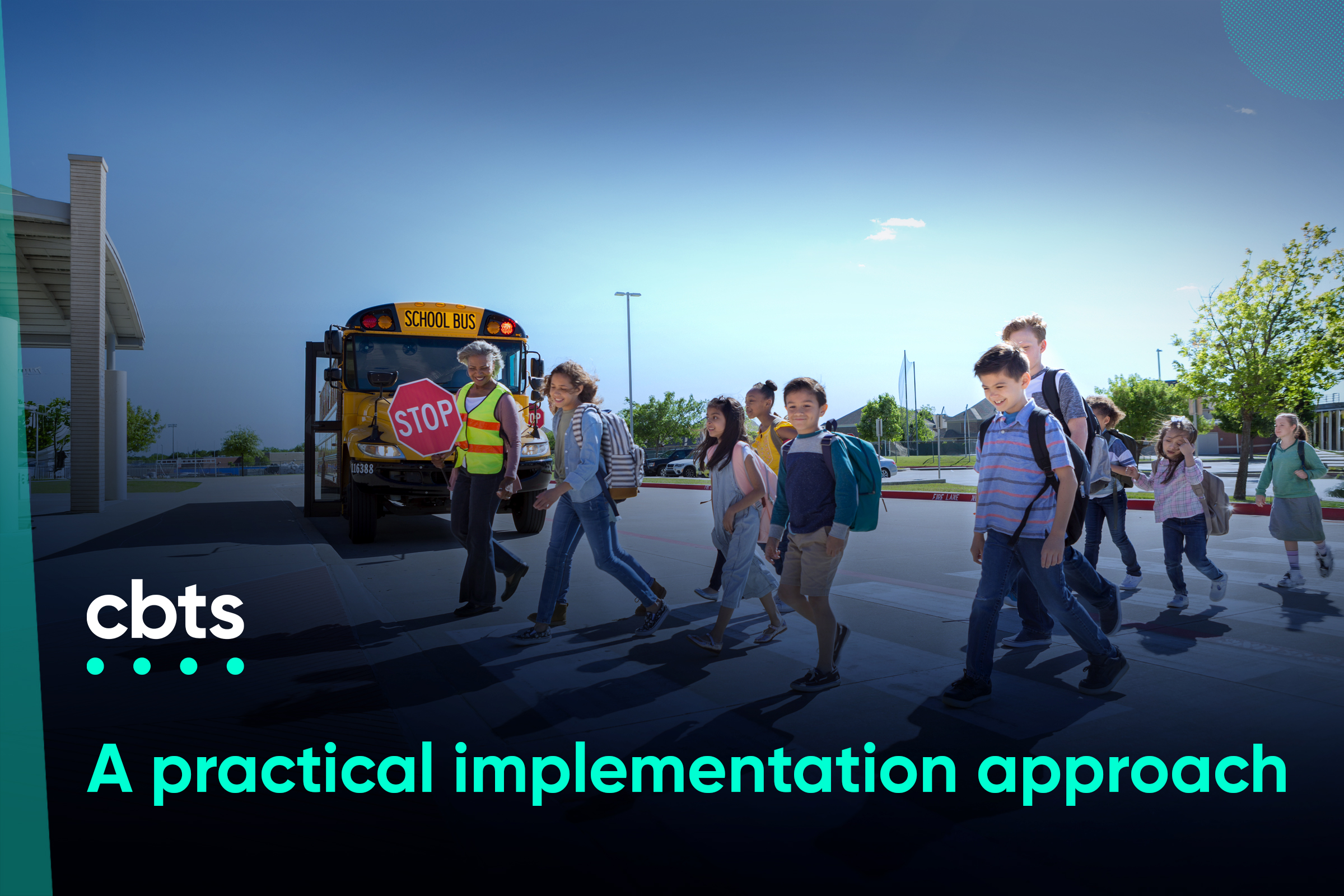
A practical implementation approach
Assess → Equip → Deploy → Train → Operate.
CBTS delivery components:
- Assessments (current state + readiness)
- Equipment needed (right-fit panic initiation options + notification endpoints)
- CBTS support model (coverage, escalation, lifecycle)
- Monitoring and management (operational reliability)
- Training included (ensure staff know when/how to activate and respond)
- Optional: grant funding resources (identify potential resources where applicable)
Use cases
- Discreet threat/active intruder: silent activation + silent alerts to staff.
- Medical emergency: rapid alerting to appropriate response teams.
- Campus-wide incident communications: centralized notifications for instructions and updates.
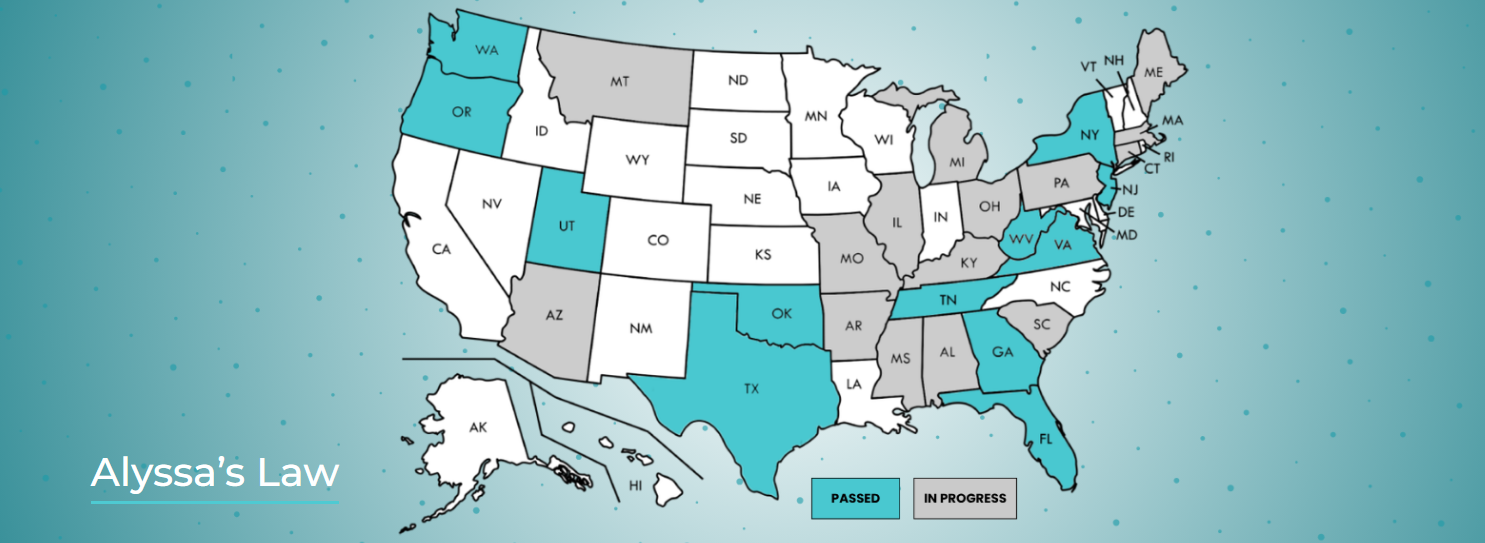
Alyssa’s Law requirements across the nation
These are the states that have enacted Alyssa’s Law:
- Florida
- Georgia
- New Jersey
- New York
- Oklahoma
- Oregon
- Tennessee
- Texas
- Utah
- Washington
These states have taken significant steps to enhance school safety by implementing Alyssa’s Law, recognizing the importance of prompt and efficient emergency response systems.
Several states are in the process of implementing some form of Alyssa’s Law, including:
- Alabama
- Arizona
- Arkansas
- Connecticut
- Illinois
- Kentucky
- Maine
- Massachusetts
- Michigan
- Mississippi
- Missouri
- Montana
- Nebraska
- Ohio
- Oregon
- Pennsylvania
- South Carolina
- Virginia
- West Virginia
In these states, efforts are underway to pass Alyssa’s Law, reflecting a commitment to fostering safer educational environments. The legislative processes are advancing to ensure that schools have robust emergency communication systems in place.
Additionally, it is worth noting that there is ongoing consideration at the federal level for legislation related to school safety. This federal initiative highlights the national significance of Alyssa’s Law, underscoring the need for standardized safety measures in educational institutions nationwide.
Alyssa’s Law Requirements: Mass Notification for School Safety