








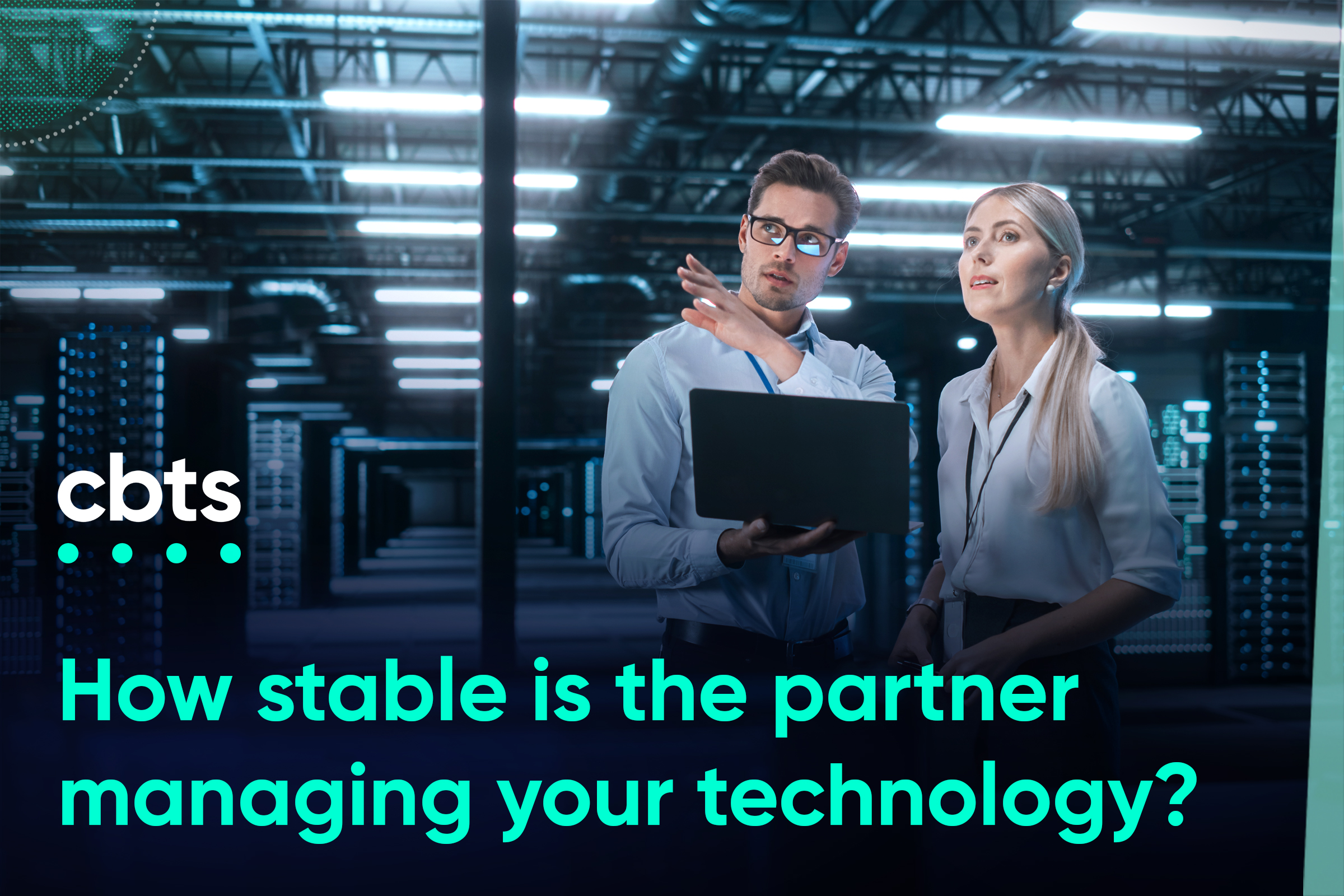
Most IT leaders I meet have done vendor diligence. They have run the RFP, reviewed financial statements, checked roadmaps, and sat through analyst briefings. By the time they sign, they know their OEM inside and out. What they almost never scrutinize with the same rigor is the layer sitting between them and that OEM: the integrator. An IT integrator, sometimes called a value-added technology reseller, is the organization that manages that OEM relationship on your behalf, owns your day-to-day support, and is accountable when something breaks. Most organizations spend years vetting their OEM and almost no time vetting the partner who manages it. That is where the risk lives.
The integrator layer is load-bearing
Think about what your integrator actually does. They hold the contract structure. They own the support escalation path. When something breaks on a Saturday night, they are the ones answering the phone. They carry the institutional knowledge of your environment that no OEM relationship can fully replicate.
Enterprise technology moves fast by design. OEM portfolios evolve, account teams change, and product roadmaps are updated to reflect where the market is heading. What it means for your organization, though, is that the integrator is often the one constant across all that movement — the partner who holds the institutional knowledge of your environment, stays with you through transitions, and is there when things go sideways. That is not a support function. That is a structural dependency. And most governance processes do not treat it that way. Gartner research found that 84 percent of executive risk committee members reported third-party partner failures led to direct operational disruptions — most of which were not reflected in the original business case.
What does IT partner instability cost your organization?
When I ask IT leaders what they think it costs to switch integrators, they usually go straight to the obvious: migration complexity, re-platforming, and new contracts. Those are real. But the cost that rarely makes it into a business case is the soft stuff.
There is the time it takes to rebuild trust with a new team. There are procurement cycles that turn into no-man ’s-land, where you are waiting, nothing is moving, and the business is standing still. Enterprise procurement is more rigorous than ever. That is not a bad thing. But when you are unexpectedly forced into it because your partner has become unstable, it creates frustration at every level of the organization.
The warning signs are often visible well before the situation becomes a crisis. A partner in financial stress tends to quietly shift into maintenance mode: not driving your roadmap forward, not asking where you want to go with the platform, just collecting the invoice and hoping you do not ask too many questions. By the time you recognize the relationship has been hollow for a while, you are already behind.
What should you look for when evaluating IT partner stability?
Most organizations apply rigorous due diligence to OEM selection and almost none to the integrator managing that relationship. If you have not stress-tested your partner, here is where I would start:
- Financial stability. Not just whether they are profitable, but whether their revenue model is predictable. A resale-heavy business can exhibit significant lumpiness, with sharp peaks and steep valleys that closely track market conditions and supply chain cycles. A partner with a strong services base has recurring, predictable revenue. That steadiness matters when you need them to show up consistently.
- Support depth and locality. Who actually answers the phone when you have a critical issue on a weekend? And when they pick up, do they solve it, or do they turn around and call the OEM? There is a real difference between a partner with genuine technical depth and one that is just a pass-through. Look for expert-level certifications, not just volume.
- SLA track record. Any integrator worth evaluating should be able to show you historic SLA performance, not just a contractual commitment. Contracts are a financial mechanism. Actual attainment data tells you what they deliver in practice. Ask to see it across multiple years. For reference, CBTS has maintained five-nines SLA performance over 30 years. That is the standard against which to measure.
- Roadmap and innovation investment. Is your partner actively investing in new capabilities, or have they stopped moving? A stalled roadmap is a leading indicator of deeper problems. You will see it before you feel it. Watch it.
- Team continuity. Churn in account-facing and delivery roles creates risk. The knowledge of your environment leaves with those people. Strong integrators retain their technical teams, not just their sales teams.
Disruption is a window, not just a crisis
When an integrator becomes unstable, something important happens. Switching costs drop. Internal urgency is already justified. Leadership is paying attention. That is a rare set of conditions.
The IT leaders who come out ahead are the ones who use that window to evaluate whether the relationship was optimized from the start. Not just to find a replacement, but to ask: are we getting the partnership we need, or just the one we inherited?
Take a company we work with in the franchise space. They were running on an integrator that checked every box for instability: financial stress, weak support coverage, and no real technology roadmap. When the situation came to a head, they did not just look for a swap. They looked at what they actually needed from a partner at their scale: thousands of locations, thin margins, zero tolerance for downtime. The decision they made came with an architectural upgrade that cut their location-level outages by more than half. That is the difference between treating a disruption as a fire drill and treating it as a strategic moment.
What stability looks like
At CBTS, roughly half our business comes from services. That is not an accident. It creates financial predictability, allowing us to invest steadily, retain our people, and absorb market volatility without it affecting how we serve customers. We have built the muscle for consistent SLA delivery over three decades because that is what services-weighted business demands.
Partners whose business is weighted heavily toward resale tend to feel the swings of supply chain cycles and market shifts more acutely. We do not have that level of exposure because the services side of our business acts as a stabilizer. When your environment hits turbulence, you want a partner who stays constant.
The depth of our OEM relationships adds a second dimension to that stability. CBTS maintains strategic partnerships across a broad range of technology providers — not to be all things to all customers, but because enterprise environments are rarely built on a single platform. When your integrator has trusted relationships throughout the ecosystem, they can advocate for what truly benefits your environment rather than what a single-vendor relationship offers them. You get a wider view, more options as your needs evolve, and a partner whose recommendations are shaped by your outcomes — not by any one alliance.
Ready to evaluate your current partner relationship?
Whether you are navigating a transition right now or want to evaluate what you have, CBTS is ready to talk. Request a Partner Health Review, and we will come prepared.
Source: Gartner, ‘Gartner Survey Shows Third-Party Risk Management Misses Are Hurting Organizations,’ February 2023.